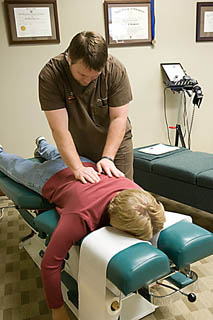
Cervical decompression is a non-surgical form of spinal decompression focused on reducing pressure through the neck, especially when irritated discs, joints, or nerves may be contributing to symptoms. For patients in Wheat Ridge, CO, it is important to understand what cervical decompression is, what it may help with, and when a neck adjustment or another conservative approach may be more appropriate.
Neck pain can make simple routines feel harder than they should. Looking over the shoulder while driving, sitting at a desk, sleeping comfortably, or lifting a bag can become frustrating when the neck feels compressed, stiff, or irritated. Some people also notice pain traveling into the shoulder blade, arm, hand, or fingers.
That is why the first step should not be guessing. It should be understanding the pattern.
What does cervical decompression mean?
Cervical decompression refers to controlled traction applied to the neck. The goal is to gently reduce pressure through the cervical spine, which is the upper portion of the spine that runs through the neck. This is different from a general stretch because the force, angle, and timing are guided with more intention.
In many cases, cervical decompression is discussed when symptoms may involve disc pressure, nerve irritation, or restricted motion in the neck. The Disc Chiropractic provides information about cervical decompression as part of their spinal decompression care for patients looking into non-surgical options.
The key phrase is “may involve.” Not every neck problem is a disc problem. Not every case needs decompression. A proper evaluation helps determine whether spinal decompression fits the patient’s symptoms.
Why do neck symptoms sometimes travel into the arm?
The neck contains nerve roots that branch from the spinal cord and travel into the shoulders, arms, hands, and fingers. When one of those nerve roots becomes irritated, symptoms may travel away from the neck. This pattern is often called cervical radiculopathy.
The American Academy of Orthopaedic Surgeons describes cervical radiculopathy pain as often starting in the neck and traveling down the arm. The pain may feel sharp, burning, or electric, and certain neck movements may make it worse.
That description is important because many people assume arm symptoms always come from the shoulder, elbow, or wrist. Sometimes they do. But sometimes the neck is involved.
A person in Wheat Ridge who feels neck pain with numbness, tingling, or weakness in the arm should not ignore those symptoms. Those signs deserve a careful exam.
How common is neck pain?
Neck pain is one of the most common musculoskeletal problems worldwide. The Global Burden of Disease 2021 Neck Pain Collaborators projected that global neck pain cases may reach about 269 million by 2050, a 32.5% increase from 2020.
That number matters because it shows that neck pain is not a minor inconvenience for many people. It affects work, driving, sleep, exercise, and daily confidence. It also shows why more patients are asking about conservative options such as spinal decompression, chiropractic care, exercise-based rehab, and neck adjustment care.
Still, common does not mean simple. Two people can both have neck pain and need very different care plans.
Is cervical decompression the same as a neck adjustment?
No. Cervical decompression and a neck adjustment are not the same thing.
Cervical decompression uses traction to reduce pressure and create controlled unloading through the neck. A neck adjustment is usually focused on improving joint motion and reducing mechanical restriction in the cervical spine. Both may be part of conservative care, but they are used for different reasons.
For example, a patient with joint stiffness and limited range of motion may respond well to a neck adjustment. A patient with signs of disc-related pressure or radiating arm symptoms may need a different approach that includes spinal decompression, movement coaching, and a gradual care plan.
This is why the evaluation matters more than the treatment name.
What does the research say about cervical traction?
The research on traction and spinal decompression is mixed, and that should be stated clearly. A Cochrane review on mechanical traction for neck pain found limited high-quality evidence and reported that one low-risk-of-bias trial did not show a clear advantage of continuous traction over placebo traction for chronic neck disorders with radiating symptoms.
That sounds cautious, and it should. Patients should not be told that one therapy works for everyone.
However, later research has shown more encouraging findings in selected cases. A 2018 systematic review and meta-analysis found that adding traction to physical therapy for cervical radiculopathy showed significant effects on pain in the short and intermediate term, along with disability improvement at the intermediate term.
So the more accurate message is this: cervical decompression may help certain patients, especially when the symptoms match the type of problem traction is designed to address. It is not a universal solution, and it should be used thoughtfully.
Who may be a good candidate for cervical decompression?
A person may be a candidate for cervical decompression if they have neck pain that feels compressed, symptoms that travel into the shoulder or arm, stiffness that does not improve with basic stretching, or pain that worsens with certain neck positions.
Patients may also ask about spinal decompression when they want to explore conservative care before considering more invasive options. That is reasonable, but the decision should still come from a clear exam and symptom history.
Some cases need medical evaluation first. Sudden weakness, loss of coordination, difficulty walking, fever, unexplained weight loss, severe headache, recent trauma, or symptoms that are rapidly worsening should be addressed promptly by a medical provider.
What should patients ask before starting care?
Patients should feel comfortable asking what the exam showed, why cervical decompression is being recommended, how progress will be measured, and what signs would suggest the plan needs to change. These are practical questions. They help make care more transparent.
They should also ask what they can do between visits. Decompression may be one part of care, but posture habits, sleep position, desk setup, strengthening, and movement breaks can all influence how the neck responds.
A good care plan should help the patient understand their own body better. That is what makes treatment more empowering.
What is the main takeaway?
Cervical decompression may be a helpful option for some patients with neck pain, disc-related pressure, or symptoms that travel into the arm. It works differently from a neck adjustment, and it should be recommended only after the patient’s symptoms, movement, and overall history are reviewed.
For patients in Wheat Ridge, CO, the best starting point is an evaluation that explains what may be contributing to the pain and whether spinal decompression fits the case. When patients understand the “why” behind care, they can make better decisions with more confidence.